Gemini 4 Argon Explained: Access, Price and Benchmarks
Gemini 4 Argon Explained: What Google's Frontier Model Can Actually Do
Google introduced Gemini 4 Argon on September 30, 2026. Google says the model can produce up to one million output tokens. It is built for long jobs in coding, finance, law, and cyber defense.
There is one important catch: most people cannot use it yet.
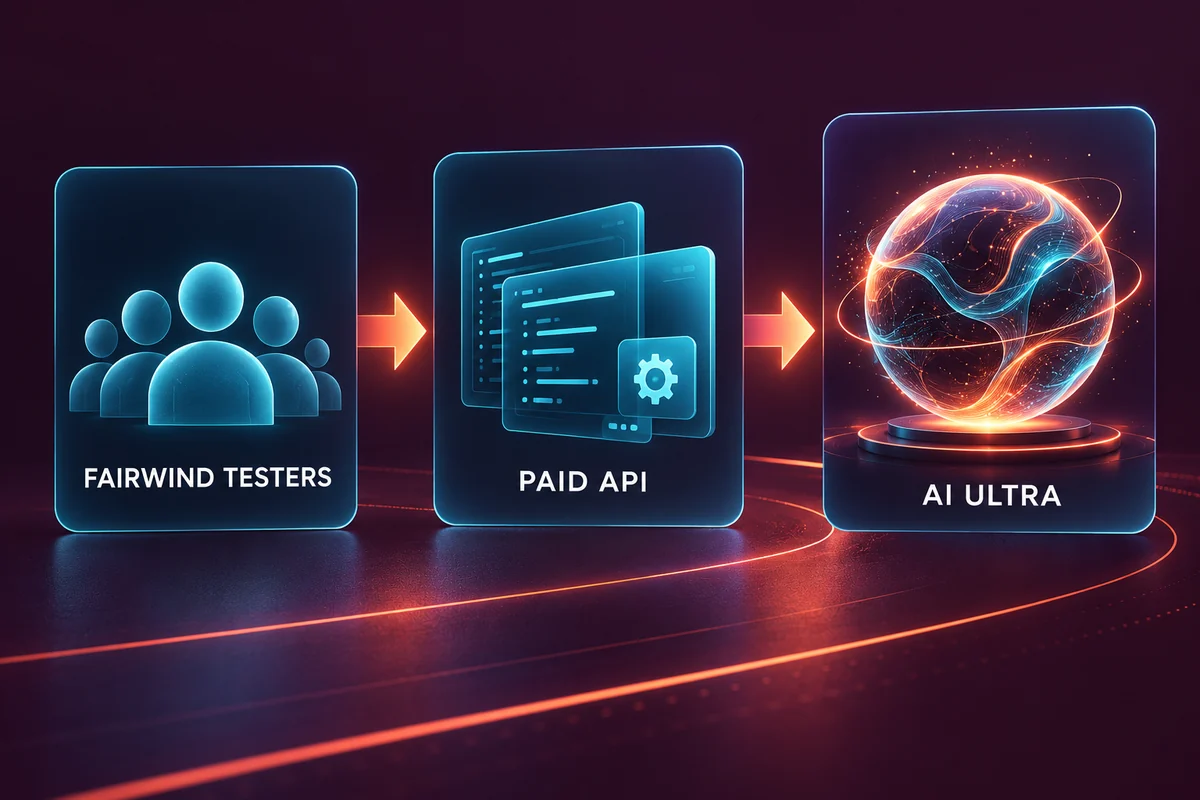
Argon is first rolling out through Google's Fairwind Program. This gives a small group of trusted cyber defenders early access. Google plans a wider release later, starting with paid API users and Google AI Ultra subscribers, but it has not given a public launch date.
Argon may be a major technical step. Its careful rollout also shows how frontier AI releases are changing.
What is Gemini 4 Argon?
Gemini 4 Argon is Google DeepMind's newest frontier model. It is made for jobs that take many steps. The model can inspect files, use tools, test an idea, correct its work, and continue toward a larger goal.
Google highlights four main areas:
- software engineering and code migration;
- legal and financial knowledge work;
- defensive cybersecurity;
- multimodal analysis and creative writing.
AI models can look great on short tests but lose track during a long job. Argon is meant to stay useful when the work becomes messy and detailed.
Who can access Gemini 4 Argon?
As of October 1, 2026, Argon is not a normal public release. Early access is limited to selected defenders in the Fairwind Program. Google says it is gathering feedback and improving safeguards before opening the model to more users.
The company is also taking part in the US government's voluntary pre-release review. Wider access is expected, but “as soon as possible” is not a launch date. Treat any website offering instant public access with care.
Google lists early API pricing of $2 per million input tokens and $10 per million output tokens. Cached input gets a 95% discount. Later, the listed rates rise to $4 and $20.
The one-million-token output claim
Argon's most unusual feature is its stated one-million-token output limit, up from 64,000 tokens in the previous generation. That is an output ceiling, not automatically the same thing as a context window.
Output is what a model writes. Context is what it can read. Google promotes the one-million-token output limit. Yet Vals lists a one-million-token context and a 262,000-token output cap in its test setup. Public API documents should settle the production limits.
A longer answer is not always better. The real test is whether Argon can follow rules and avoid errors across a large job.

Why developers are paying attention
Google says Argon is already helping its engineers. Teams used it to move large C and C++ codebases to Rust. This included more than 800,000 lines in Fuchsia's Zircon kernel.
Google also reports that a Rust port of the libgav1 video decoder replaced 32,000 lines of hand-written SIMD code. It ran 2.7 times faster than an earlier Rust port. These are Google examples, not neutral lab tests.
Gemini 4 Argon benchmarks: strong, not unbeatable
Google's results place Argon near the front on several tests. It scored 77.9% on DeepSWE, 65.4% on Finance Agent v2, and 51.3% on AutomationBench. Vals ranks it first on the Vals Index at 68.9%.
Argon still trails some rivals on FrontierSWE, Terminal-Bench 4.0, Terminal-Bench Science, and parts of computer-use testing. Vals also warns that long agent runs can cost more.
Benchmarks do not mirror every business job. Teams should test Argon on their own files, rules, and failure cases.
Cyber defense comes first
Argon's first users are cyber defenders because Google says the model can find, validate, and patch software flaws. Fairwind testers receive a version without the normal cyber capability restrictions so they can investigate serious threats.
Google says Wiz used Argon to find a critical flaw in healthcare software that other frontier models missed. The public post lacks enough detail to verify the comparison. Treat it as Google's report.
Stronger cyber skills also raise the risk. Google's safeguards include request refusals, action checks, secure sandboxes, and prompt-injection defenses. The staged release tests those controls.
Official announcement on X
“Introducing Gemini 4 Argon – our new frontier model. It's built for complex workflows across coding, enterprise knowledge work, and cybersecurity defense.” — Google DeepMind
https://x.com/GoogleDeepMind/status/2105388084154056939
Google DeepMind confirms that access begins with trusted Fairwind testers.
Google also highlighted the output limit in its main announcement on X, while Google AI focused on long-horizon reasoning.
Video: a first news recap
AI & Tech Broadcast covers Argon in its October 1 AI news roundup. The segment is in Japanese and is not an official Google explainer.
Should you wait for Gemini 4 Argon?
Argon looks promising for teams that manage large codebases, complex research, or defensive security. However, there is nothing to buy or migrate to today unless Google has invited your organization.
Prepare test tasks now. Pick real jobs with clear success rules. Record quality, time, review effort, and cost. Then compare Argon with your current tools.
Gemini 4 Argon may become one of the most capable models of 2026. For now, it is best understood as a powerful preview with strong evidence, important unknowns, and a waitlist.
Frequently asked questions
Is Gemini 4 Argon available to everyone?
No. It is initially available to selected cyber defenders through Google's Fairwind Program. Google plans wider paid API and Google AI Ultra access but has not announced a firm date.
How much will Gemini 4 Argon cost?
Google lists introductory API rates of $2 per million input tokens and $10 per million output tokens. Standard rates are listed as $4 and $20 after the introductory period.
Does Argon have a one-million-token context window?
Google's launch claim is a one-million-token output limit. Vals lists a one-million-token context configuration for its evaluation. Final public API documentation will be the best source for production limits.
Is Gemini 4 Argon the best coding model?
It leads some coding tests, including DeepSWE, but does not lead every benchmark. The right answer depends on your repository, tools, cost limits, and review process.
Why is Google releasing Argon to cyber defenders first?
Argon has powerful vulnerability-finding and patching skills. A controlled release lets trusted defenders use those skills while Google tests safeguards against misuse.
Sources
Building 120+ free AI-powered SEO tools — every article is written and tested with them. About us
Try the tools we used
All articles are written with SEO Fragments. Sign in free and use the same tools.
Get started free →Read next
- Claude Haiku 5.5: The Small Model That Wants to Do the Busy WorkClaude Haiku 5.5 is Anthropic's fastest and lowest-cost small model yet. See its pricing, benchmarks, limits, safety controls, and best use cases.
- Claude Sonnet 5.5: Features, Pricing and BenchmarksClaude Sonnet 5.5 promises faster coding and polished knowledge work at Sonnet pricing. Here is what changed, what it costs, and where it fits.
- AI Visibility Audit: A Practical 5-Step GuideAn AI tool can recommend your competitor while ignoring your brand. It can also name you without linking to your site. Both results affect visibility, but they…