Kimi K3.1 Pro: What Moonshot's New Open-Weight Model Really Offers
Open-weight AI models used to be the cheaper, weaker cousins of closed systems. Kimi K3.1 Pro tries to change that story. Moonshot AI says its new model comes close to the best proprietary models on several coding and agent tests. It has a 1-million-token context window. And the full weights are promised by November 4, 2026.
Key takeaway: Kimi K3.1 Pro looks like a serious option for coding agents, 3D work, and finance tasks. But most numbers come from Moonshot itself. The model trails Claude Opus 5.5 and GPT-6 Astra on several tests. And the launch post does not list K3.1 Pro pricing.
What is Kimi K3.1 Pro?
Kimi K3.1 Pro is the first model in Moonshot's new K3.1 series. Moonshot says it is a post-trained version of Kimi K3 with far more post-training compute. The company calls it its most capable "3T-class" open-weight model so far. The post does not define that term, so treat it as a size label, not a spec.
Moonshot also released Kimi K3.1 Pro Highspeed. The company says it runs two to three times faster than the standard model. That matters for chat and agent loops, where waiting time adds up.
Moonshot says it ran reinforcement learning across hundreds of downstream domains and rebuilt parts of its training stack so extra compute gave stable gains.
Release date, access, and open weights
- Hosted model: Available now, according to Moonshot. You can use it on Kimi.ai, the Kimi mobile apps, Kimi Work, Kimi Code, and the Kimi API.
- Open weights: Promised by November 4, 2026. As of this writing, that is an announcement, not a download.
- Enterprise: Kimi Enterprise admins can enable the model, but access is off by default at launch.
Setup details from the announcement:
- Kimi Work needs desktop version 3.1.0 or later, on Windows or Apple silicon Macs.
- In Kimi Code, pick the model with the
/modelcommand. - In the API, use
kimi-k3.1-proorkimi-k3.1-pro-highspeed. - API customers can get Zero Data Retention, per Moonshot.
The post does not cover the license terms for the weights or the maximum output length. Check both when the weights land.
Coding: where Kimi K3.1 Pro is strongest
Coding is the main story. On Terminal-Bench 4.0, Moonshot reports 65.7% for K3.1 Pro. It lists GPT-6 Astra at 58.2% and Claude Opus 5.5 at 66.4%. So K3.1 Pro sits narrowly behind Opus 5.5 and ahead of GPT-6 Astra on that test.
Read the fine print. Moonshot ran its own model with the Claude Code harness and took other scores from vendor blogs or the official leaderboard. Setups differ, so small gaps prove little.
Moonshot also reports 61.2% on its internal Kimi Code Bench 3.0 Long-horizon, up from 55.95% for K3. That is an in-house test, so it shows progress inside the Kimi family, not a cross-vendor ranking.
The most interesting example is a walking simulator. Moonshot says K3.1 Pro built a human walking simulator, with training and evaluation pipelines, on an open-source anatomical model. Over 167 missions and 420 independent reviews, the simulated body went from collapsing in seconds to walking for 11.2 seconds. When reward tuning failed, the model did not keep guessing. It probed the simulator, found 36 errors in shoulder-muscle calculations, and retrained.
That behavior matters more than the score.
3D modeling and CAD: strong, but not first
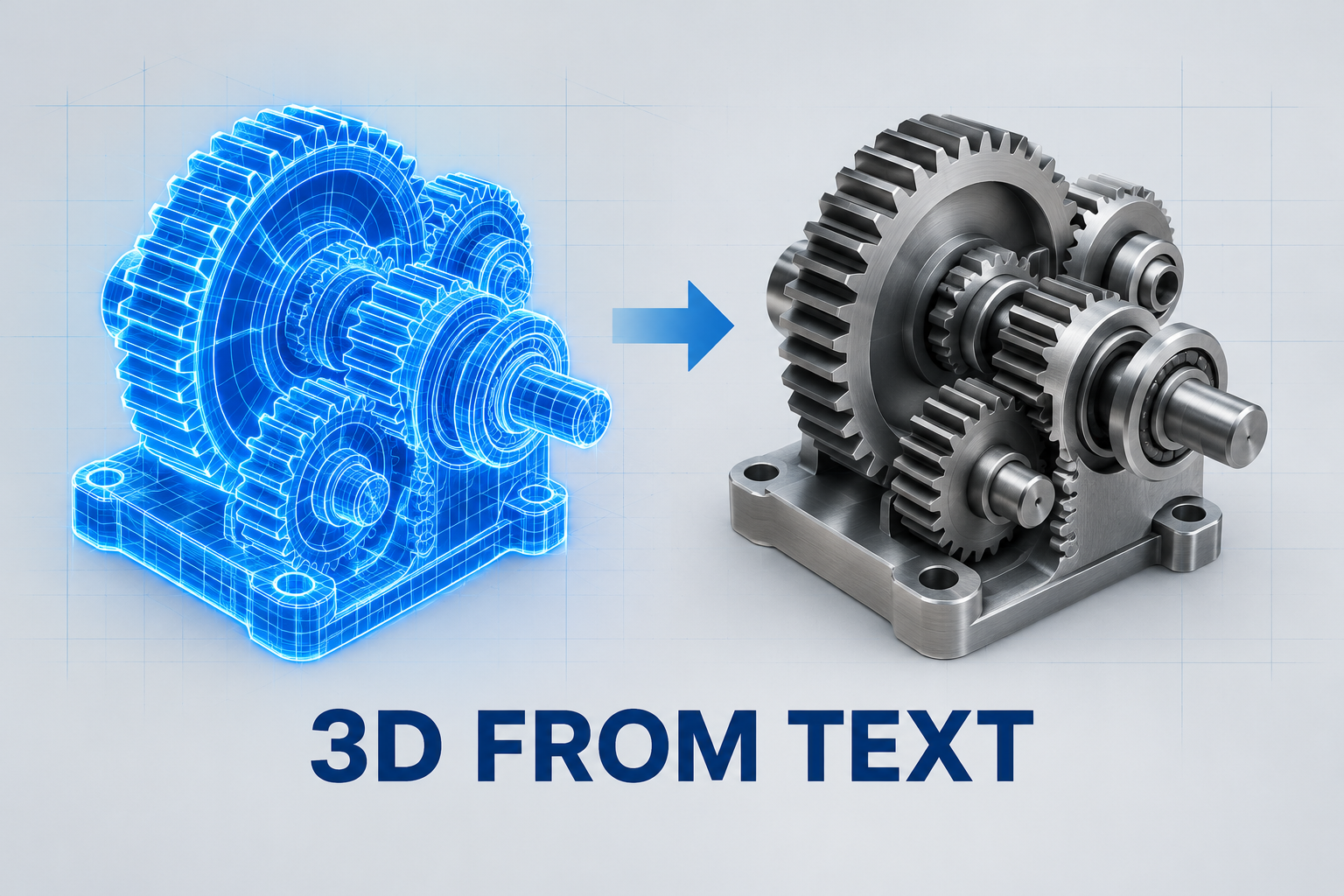
Moonshot says K3.1 Pro is good at 3D creation and spatial reasoning. On BenchCAD, which tests CAD code generation from multi-view renderings, it scores 92.7% with tools. Moonshot lists Claude Opus 5.5 at 96.2% and GPT-6 Astra at 95.9%. Without tools, K3.1 Pro scores 72.8% against 73.0% for Opus 5.5.
The tool-assisted gap is real; the no-tool gap is tiny. Moonshot used a 1,000-case subset, so treat the result as indicative.
The practical angle is parametric modeling. Moonshot says the model can write and run scripts for tools like Blender and CAD software without MCP connectors. It can then build parts, edit components, and adjust geometry, materials, and scene layout. The company also launched 3D Make on Kimi.ai, which lets users preview, edit, and export models for 3D printing.
Finance and factual accuracy
Moonshot claims state-of-the-art results on OfficeQA Pro v2, with a score of 64.4. That test uses real financial documents and needs retrieval, cross-checking, and multi-step math. On its internal finance tests, Moonshot reports gains over K3 of 7.2 points in financial modeling and 11.6 points in financial research. It says its business-operation score is about 4.2 times higher.
The more interesting number is hallucination. On Kimi Hallu Bench Hard, claim-level hallucinations fell from 23.4% for K3 to 8.3%. Moonshot warns this is a stress test, not an everyday error rate. It is also Moonshot's own benchmark.
In the full chart, GPT-6 Astra scores lower (better) than K3.1 Pro in both settings, while K3.1 Pro beats Opus 5.5 in both. Good, but not a clean win.

A different approach to cybersecurity
Moonshot says it removed cyber-related data from both mid-training and its reinforcement-learning environments. Its aim was to keep the open release below what its pipeline could otherwise produce.
The company's own test shows the effect. On xdev-bench-hard, a checkpoint without those controls solved 90.5% of problems. The final K3.1 Pro solved 81.0%. Moonshot adds that K3.1 Pro is still behind proprietary frontier models that have been public for at least three months.
Two takeaways: this is a clear policy choice for an open-weight model, and general coding gains still spill into security tasks. Independent testing will matter once the weights are public.
Pricing and cost caveats
Moonshot's launch post does not list a K3.1 Pro price. The Kimi help center says K3 uses flat pay-as-you-go pricing with no tiers by context length. A third-party tracker, BenchLM, lists K3 at $3 per million input tokens and $15 per million output tokens. Those are K3 rates, not K3.1 Pro rates. Check the official API page before you budget.
A 1M-token window also does not mean cheap long prompts; filling it costs real money.
Where Kimi K3.1 Pro does not lead
A fair summary needs the gaps:
- Terminal-Bench 4.0: 65.7%, just behind Claude Opus 5.5 at 66.4%.
- BenchCAD with tools: 92.7%, behind Opus 5.5 and GPT-6 Astra.
- Hallucination (Hallu Bench): GPT-6 Astra scores lower in both settings.
- Cyber: Moonshot says it trails public frontier models by design.
Most results come from Moonshot's own runs, some on internal benchmarks. Treat them as a strong first signal, not a verdict.
What this means for you
Treat Kimi K3.1 Pro as a strong candidate, not a default switch. Here is a simple plan:
- Test on your own tasks. Run the same ten real coding or analysis jobs on K3.1 Pro and your current model. Compare quality, speed, and cost.
- Try Highspeed for interactive work. Faster responses help most in chat and agent loops.
- Wait for the weights before planning self-hosting. Check the license, hardware needs, and any usage limits on release day.
- Keep humans in the loop for finance and security. Lower hallucination rates are not zero.
If you run coding agents or need long context, K3.1 Pro deserves a spot in your test set. If you need the top score on every task, the closed leaders still hold a small lead.
Frequently asked questions
Is Kimi K3.1 Pro open source?
Moonshot calls it an open-weight model and says the full weights will be released by November 4, 2026. Open weights are not the same as open source. The announcement does not describe the license, so check it at release.
What is the context window of Kimi K3.1 Pro?
Moonshot lists a 1-million-token context window. The launch post does not state a maximum output length.
How is Kimi K3.1 Pro different from Kimi K3?
Moonshot describes it as a post-trained version of K3 with much more post-training compute. It reports gains in coding, 3D creation, finance, and factual accuracy over K3.
What is Kimi K3.1 Pro Highspeed?
It is a faster version released alongside the main model. Moonshot says it delivers two to three times the speed of K3.1 Pro.
Is Kimi K3.1 Pro better than Claude Opus 5.5?
Not on every test Moonshot reports. It scores slightly below Opus 5.5 on Terminal-Bench 4.0 and BenchCAD with tools, but slightly above it on some factual-accuracy results. Independent testing is still needed.
Building 120+ free AI-powered SEO tools — every article is written and tested with them. About us
Try the tools we used
All articles are written with SEO Fragments. Sign in free and use the same tools.
Get started free →Read next
- Claude Haiku 5.5: The Small Model That Wants to Do the Busy WorkClaude Haiku 5.5 is Anthropic's fastest and lowest-cost small model yet. See its pricing, benchmarks, limits, safety controls, and best use cases.
- Gemini 4 Argon Explained: Access, Price and BenchmarksGemini 4 Argon promises long-running AI workflows, strong coding and a 1M-token output limit. Here is what Google announced—and what remains unknown.
- Claude Sonnet 5.5: Features, Pricing and BenchmarksClaude Sonnet 5.5 promises faster coding and polished knowledge work at Sonnet pricing. Here is what changed, what it costs, and where it fits.